Network Kings, India’s Leading IT Career Training Academy
- Email: support@nwkings.com
- SCO 41-43, B Block, 4th floor, Chandigarh Citi Center




Wondering how to become a DevOps Engineer from scratch or want to see yourself as a DevOps Engineer, but don’t know how to initiate?
Before making your dream come true of becoming a DevOps Engineer, you must know the major role of a DevOps Engineer. The vital role of a DevOps Engineer is to present methods to counterbalance requirements throughout the software development life cycle, processes, and tools, from coding to growth to upkeep and updates. They observe health and pursue everything happening in the system parts during the software lifecycle.
This blog will help you know the pathway to becoming a DevOps Engineer. Keep reading if you want to become a DevOps engineer.
Who is a DevOps Engineer?
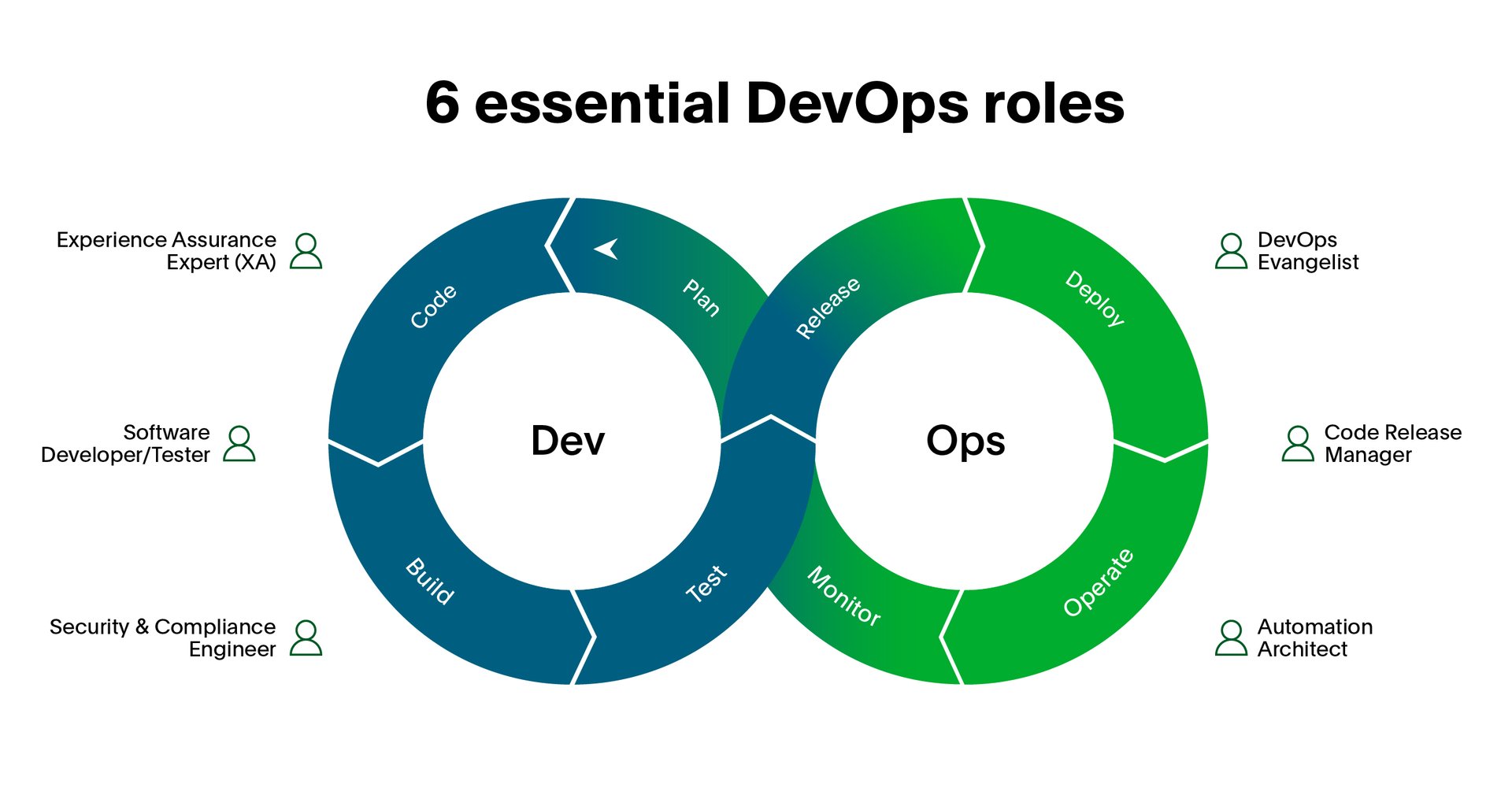
A DevOps engineer is an IT generalist who should have a high proficiency in both development and operations, comprising coding, infrastructure management, system administration, and DevOps toolchains. The work of DevOps Engineers is to build a collaborative environment and must possess interpersonal skills.
DevOps engineers need to have a better insight into common system architecture, provisioning, and administration but must also know the classic developer toolset and practices, such as using source control, passing and obtaining code reviews, writing unit tests, and understanding agile principles.
What is the role of a DevOps Engineer?
The role of a DevOps Engineer are:
- Evaluating current systems and processes, and devising ways to enhance them.
- Building and arranging new growth tools and infrastructure.
- Comprehending the needs of stakeholders and fetching this to developers.
- Functioning with developers and other IT colleagues to overlook code releases.
- Writing specification documents.
- Testing and examining code written by others and analyzing results.
- Specifying technical problems and inventing software updates and ‘fixes’.
- Designing out tasks and being involved in project management decisions.
How to Become a DevOps Engineer?
https://youtu.be/dV1lzwX7REI
Becoming a DevOps Engineer is not that difficult. Here are the prerequisites for becoming a DevOps Engineer:
- The candidate must possess knowledge of Software development and system administration.
- You must know at least one of the languages: Python and Ruby.
- One must know at least one configuration management tool like Puppet or Chef.
- It will be advantageous if you have experience with cloud infrastructure like Amazon Web Services or Google Cloud Platform.
- Earn a valid DevOps Engineer certificate from a renowned institution like Network Kings.
Note: Below listed are the steps to become a certified DevOps engineer with Network Kings.
DevOps Career Path
DevOps Career Path includes the knowledge of various courses:
Programming Language and Linux Fundamentals: DevOps uses programming languages for designing and automating software. To become a DevOps engineer, it is important to learn a programming language, in addition to exact DevOps tools. The three most typical languages used with DevOps tools are Ruby, Python, and JavaScript. It learns at least one of these programming languages to operate with the DevOps tools.
Source Code Management: The next landmark for a DevOps engineer is to find source code management. It is paramount to keep your projects scheduled, regardless of the number of code sets you have. Learn these standard source code management tools: Git, CVS, and Mercurial.
Application Building: A DevOps engineer must learn to build an application and commit to the source code management tool. One of the most prevalent ways to make an application is by using Maven, an automation tool that allows growth and supervises software projects within a short period. Maven has a soft build strategy, helps parallel builds, and delivers instant entrance to new features with no additional configurations.
Automation with CI/CD Tool: We need a project object model (POM) file for creating an application. The POM file consists of jars, executive commands, the builds plugins, and the builds profile. Jenkins is one of the broadly used automation tools in the industry. It is an open-source continuous integration tool that allows automating the ongoing development, testing, and deployment of newly created codes.
Application Testing: Once you have finished the building process, you know how to automate the web application testing process. Selenium is one of the most useful testing tools for QA teams, delivering fast implementation, letting scripting in several languages, and keeping parallel test execution.
Application Deployment: Once the application completes testing, it must be deployed and driven on the exhibition server. For deploying an application, you must know the suitable containers and configuration management tools.
Monitor Applications: Monitoring applications is another noteworthy element of a DevOps engineer. We monitor change and identify existing issues to change quickly.
Cloud Providers: A DevOps engineer must know about cloud service providers and their primary applications. Cloud computing is an essential skill to learn, nevertheless, of the field you are functioning in.
How to Become a DevOps Engineer without experience?
To become a DevOps engineer without experience, you can follow the following steps:
-
Learn the Basics: Start by learning the fundamentals of software development, system administration, and automation tools.
-
Gain Knowledge: Familiarize yourself with programming languages like Python, Shell scripting, and tools such as Docker, Kubernetes, Jenkins, and Git.
-
Hands-On Experience: Practice by working on personal projects, contributing to open-source projects, or participating in hackathons.
-
Certifications: Consider obtaining certifications like AWS Certified DevOps Engineer, Certified Kubernetes Administrator (CKA), or Certified Jenkins Engineer.
-
Networking: Connect with professionals in the field, attend meetups, conferences, and webinars to expand your network.
-
Internships or Entry-Level Positions: Apply for internships or entry-level positions to gain practical experience and learn on the job.
-
Continuous Learning: Stay updated with the latest technologies and trends in DevOps through online courses, workshops, and reading relevant blogs and articles.
By following these steps and continuously improving your skills, you can work towards becoming a successful DevOps engineer, even without prior experience.
What are the DevOps Engineer Requirements?
https://youtu.be/4x1PLOAGZzY
To become a DevOps Engineer, you need these requirements:
- Understand programming languages.
- Analysis of operating systems.
- Examine networking security and protocols.
- Comprehend Infrastructure as Code.
- Embrace Continuous Integration/Continuous Deployment tools.
- Support in application and infrastructure monitoring.
- Study cloud providers.
- Learn cloud design patterns.
What skills will you learn in DevOps engineer training?
The skills required for a DevOps engineer are:
- Automation
- Communication
- Software Testing
- Coding
- System Integration
- Configuration Management
- Soft skills
- Collaboration
- Program Language
- Continuous Integration
- Decision-making
- Analytics
- Continuous delivery
- Version Control
What is DevOps training?
DevOps Training is crucial to becoming a DevOps Engineer. But before you pursue DevOps training, you must know what DevOps training includes.
DevOps certification course training provides the knowledge and skills you need to flourish in this existing field. In this course, you will know how to execute DevOps practices, including constant integration, ongoing delivery, and infrastructure as code, to facilitate software development and delivery methods.
But why should you learn DevOps? Here is the reason to learn DevOps.
- DevOps installation has a less complex problem.
- DevOps training benefits businesses with fast delivery of features.
- DevOps provides a system for best communication.
- With the help of DevOps, we can ignore the silly mistakes of developers as it separates mistakes apart.
- DevOps is that it has a considerably faster time to a demand facility.
Where to pursue DevOps training?
https://youtu.be/g0d6SgkP4fg
You can pursue DevOps training at Network Kings as you will get many options when you intend on performing a DevOps course, but NETWORK KINGS is the most popular of all the platforms for comprehending the DevOps course, and this is not just an inadequate remark but a truth. Therefore, one can have belief in us by checking our recorded sessions.
Once you meet the DevOps course training, you will see the impact and benefits of doing it from NETWORK KINGS. We believe in providing our students with the best material for their upliftment and enhancement of technology.
What are the modules you will learn in DevOps training?
The modules you will learn in DevOps training at Network Kings are:
- Govern and follow various variants of the source code using GIT.
- Devise and automate tests operating Jenkins and Maven.
- Mechanize testing of web segments employing Selenium apparatuses.
- Create and deploy containerization utilizing Docker.
- Comprehend diverse jobs and command line use of Ansible.
- Managing collection and rising with Kubernetes
- Execute ongoing monitoring utilizing Zabbix
- Further knowledge in chipping away at an industry-standard live Projects
What is the eligibility of DevOps training?
The eligibility of the DevOps training are:
- Graduation in any field.
- Fundamental knowledge of the IT industry.
- The course allows IT professionals with a background in software development, operations, or IT management.
- Participants have a necessary acquaintance with programming languages.
What are the job opportunities after DevOps training?
The top highly-paying job opportunities available in the IT industry after completing the online DevOps training are as follows-
- DevOps Engineer
- Cloud Engineer
- Site Reliability Engineer
- Automation Engineer
- Security Engineer
- DevOps Manager
- Release Engineer
- Infrastructure Engineer
- Continuous Integration/Continuous Deployment
- (CI/CD) Engineer
- Kubernetes Administrator
- Platform Engineer
- Docker Engineer
- Build Engineer
- Systems Engineer
- Network Engineer
- Database Administrator
- IT Operations Manager
- Software Development Manager
- Technical Project Manager
- Solution Architect
What are the salary expectations after DevOps training?
The DevOps Engineer salary in different countries can be:
- United States – USD 105,057 to USD 160,000 per year
- Canada – CAD 153,111 to CAD 158,434 per year
- United Kingdom – £49,654 to £177,514 per year
- Australia – AUD 92,500 to AUD 120,000 per year
- Germany – €48,000 to €79,000 per year
- France – €34,000 to €65,000 per year
- United Arab Emirates – AED 31,000 to AED 287,361 per year
- India – INR 4 lakhs to INR 14 lakhs per year
- Japan – average salary of ¥70,70,124 per year
- South Africa – ZAR 540,000 to ZAR 840,000 per year
Conclusion
There are various benefits to becoming a DevOps engineer. Anyone who wants to be a DevOps engineer must pursue their DevOps certification training. Before becoming a DevOps Engineer, one must know basic languages like Python. I hope you know the prerequisites after reading the blog.
You can start your career in DevOps with Network Kings because Network Kings offers DevOps certification courses with IT professionals.
Frequently Asked Questions [FAQs]
How do I start a DevOps engineer career?
To start your DevOps Engineer career, you must have a graduation degree, knowledge of a programming language, Linux, and network and security.
How long does IT take to become a DevOps engineer?
It takes about six months to become a DevOps Engineer.
Is DevOps easy for beginners?
It is not difficult to start with DevOps as a beginner as the beginner level of DevOps is easy to pursue.
Can I join DevOps as a fresher?
Yes, you can join DevOps as a fresher. This is because many organizations offer entry-level jobs in DevOps. To get entry-level job opportunities in DevOps you may need to have some relevant DevOps engineer skills or certifications. You can also do internships that help you to get started a career in DevOps.
Can a non IT student learn DevOps?
Because DevOps contains an overwhelming number of concepts, it is hard for DevOps non-IT students to learn DevOps.
Who is eligible for the DevOps course?
DevOps engineers need at least a graduation degree in computer science, computer engineering, or a related field.
Which tools come under DevOps?
The tools consider under DevOps are as follows- Continuous Integration (CI) tools, Configuration Management tools, Containerization and Orchestration tools, Infrastructure as Code (IaC) tools, Release Management tools, Monitoring and Logging tools, Collaboration and Communication tools, Automation and Scripting tools.
What are the 5 pillars of DevOps?
The five pillars of DevOps are culture, automation, measurement, sharing, and learning.
What are the benefits of DevOps?
The DevOps process produces quality in the growth cycle and decreases instances of unexpected work. A focus on security during the designing and growth stage underestimates the demand to fix security issues later on, thus holding time and liberating more resources for other work.
Does DevOps have a good future?
A DevOps Engineer with less than three years of work experience can expect to earn an average salary of 3,35,100 LPA. Thus, DevOps has a promising future.