Network Kings, India’s Leading IT Career Training Academy
- Email: support@nwkings.com
- SCO 41-43, B Block, 4th floor, Chandigarh Citi Center




Cloud computing is an ever-growing part of the IT ecosystem, allowing companies to store their data remotely on servers instead of storing it locally. As technology continues developing and advancing, fresh cloud trends are beginning to emerge – ones that will determine the future direction of this tech sector. In this article, we will take a look at some of these top cloud trends for 2024 and how they might affect IT in general.
What is cloud computing?
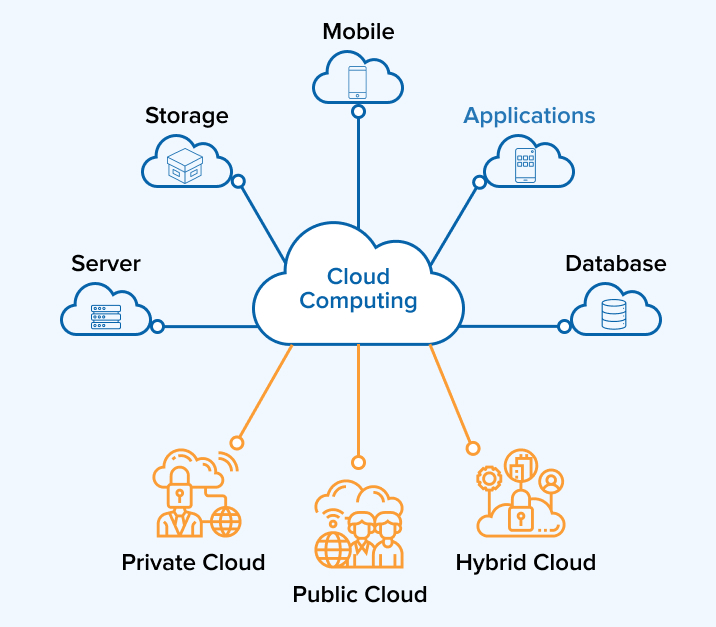
Cloud computing is all about providing computer services over the web. Instead of running programs or saving your information on personal computers, laptops, and local servers – you can access remote servers for resources and services. This technology provides scalability, flexibility as well as cost-effectiveness so it is a great option that businesses of any size should consider utilizing.
What is the need for cloud computing in IT?
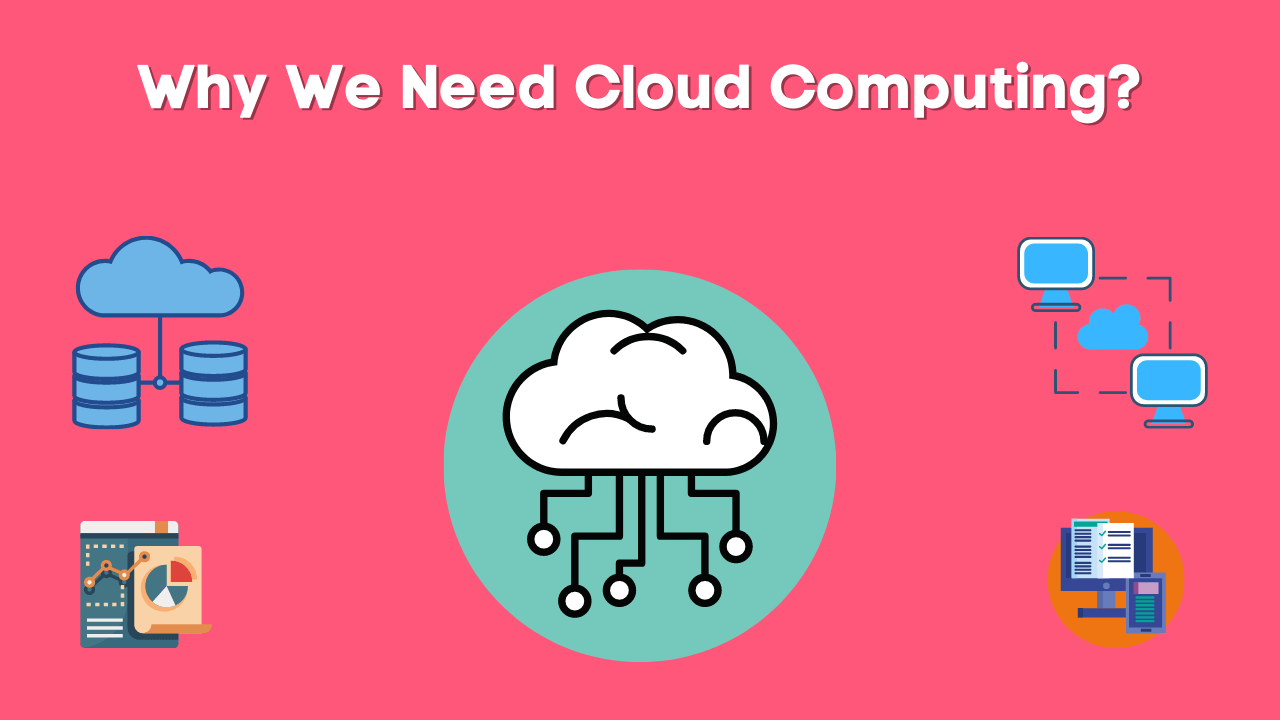
Cloud computing is critical in IT because of several reasons.
- Firstly, it offers scalability, allowing companies to conveniently modify resources to match changing needs, avoiding the necessity for pricey hardware updates.
- Secondly, it increases accessibility, enabling users to access data and apps from any place and having an internet connection that helps promote remote work and collaboration.
- Thirdly, cost efficiency improves since businesses will only have to pay for the resources they utilize instead of going through initial costs when purchasing or preserving physical structures alone.
What are the benefits of cloud computing in IT?

The benefits of cloud computing in IT are as follows-
-
Cost Efficiency
Cloud computing reduces the need for upfront capital expenses on hardware and infrastructure, allowing businesses to pay for resources on a pay-as-you-go basis.
-
Scalability
Cloud services can easily scale up or down to accommodate changing workloads and business needs, ensuring optimal resource utilization.
-
Accessibility
Cloud computing enables remote access to data and applications from anywhere with an internet connection, promoting flexibility and collaboration.
-
Disaster Recovery
Cloud providers offer robust data backup and recovery solutions, ensuring data is safe from hardware failures, natural disasters, or cyberattacks.
-
Security
Many cloud providers invest heavily in security measures, offering advanced security features and compliance certifications to protect data.
-
Automatic Updates
Cloud services often include automatic software updates, reducing the burden on IT teams for maintenance and patch management.
-
Innovation
Cloud computing provides access to cutting-edge technologies like AI, machine learning, and big data analytics, driving innovation and competitiveness.
-
Global Reach
Cloud services have a global presence, allowing businesses to reach customers and users worldwide with low latency.
-
Reduced Environmental Impact
Cloud providers optimize resource utilization, leading to reduced energy consumption and a smaller carbon footprint compared to on-premises data centers.
-
Flexibility
Cloud computing offers a wide range of services and deployment options, allowing businesses to tailor solutions to their specific needs and budgets.
What are the top cloud trends: Emerging cloud computing trends?
The top cloud trends in IT are as follows-
-
Multi-Cloud Adoption
Organizations increasingly use multiple cloud providers to avoid vendor lock-in, optimize costs, and enhance resilience.
-
Edge Computing Integration
Cloud services are extending to the edge of networks to process data closer to where it’s generated, reducing latency and improving real-time decision-making.
-
Serverless Computing
Serverless architectures eliminate the need for managing servers, making it easier to develop and deploy applications while optimizing costs.
-
Hybrid Cloud Solutions
Companies continue to integrate on-premises infrastructure with public and private cloud environments, creating hybrid cloud solutions for greater flexibility.
-
AI and Machine Learning in the Cloud
Cloud providers offer AI and machine learning services, enabling organizations to leverage these technologies without extensive in-house expertise.
-
Containerization and Kubernetes
Containers and Kubernetes are widely adopted for application deployment and orchestration, simplifying cloud-native development and management.
-
Cloud-Native Security
Cloud security trends include the integration of security measures directly into cloud-native applications and DevOps pipelines.
-
Serverless Databases
Serverless databases are gaining popularity for their auto-scaling and cost-efficient capabilities in managing data.
-
Quantum Computing in the Cloud
Cloud providers are exploring quantum computing services, potentially revolutionizing complex problem-solving and cryptography.
-
Sustainability Initiatives
Cloud providers are actively pursuing sustainability goals by investing in renewable energy, reducing data center emissions, and offering carbon-neutral services.
What are the cloud computing challenges in IT?
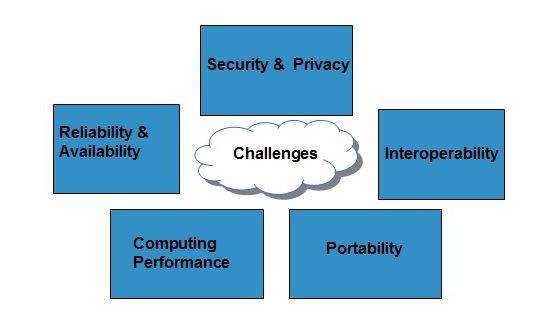
The cloud computing challenges in IT are as follows-
-
Security Concerns
Data breaches and cybersecurity threats are constant worries, as cloud services are vulnerable to attacks.
-
Compliance and Privacy
Meeting regulatory requirements for data protection, such as GDPR and HIPAA, can be complex in the cloud.
-
Data Loss and Recovery
Ensuring data integrity and having robust backup and recovery mechanisms is crucial.
-
Downtime and Availability
Cloud outages can disrupt operations, highlighting the need for high availability and redundancy.
-
Vendor Lock-In
Switching cloud providers can be costly and complex due to differences in APIs and services.
-
Cost Management
Cloud costs can spiral out of control without proper monitoring and governance.
-
Limited Control
Organizations may have limited control over infrastructure and security in the cloud.
-
Data Transfer and Bandwidth Costs
Moving large volumes of data in and out of the cloud can be expensive.
-
Compliance Audits
Auditing cloud environments for compliance can be challenging due to their dynamic nature.
-
Skill Gap
IT teams may lack the necessary cloud expertise to manage complex cloud environments effectively.
-
Performance Issues
Latency and network performance can impact application performance in the cloud.
-
Data Sovereignty
Concerns about where data is physically stored and the legal jurisdiction it falls under can arise.
-
Vendor Reliability
Relying on a third-party provider’s reliability can be a risk if they experience downtime or service issues.
-
Integration Complexity
Integrating cloud services with on-premises systems can be complex and require specialized skills.
-
Scalability Challenges
While cloud services offer scalability, applications must be designed to take full advantage of it.
-
Data Transfer Security
Encrypting data during transit between on-premises and cloud environments is critical.
-
Resource Optimization
Ensuring resources are correctly provisioned to avoid over-provisioning or underutilization can be tricky.
-
Governance and Compliance Tools
Selecting and implementing suitable tools for cloud governance can be challenging.
-
Legacy Systems Integration
Migrating and integrating legacy systems with cloud solutions can be complex and time-consuming.
-
Vendor Lock-In Mitigation
Developing strategies to minimize the risks of vendor lock-in is essential for long-term flexibility.
What is the future of cloud computing?
The future of cloud computing holds continued growth and innovation. Edge computing will extend cloud capabilities closer to end-users, enabling real-time applications. Quantum computing may revolutionize data processing. Enhanced security measures and compliance tools will evolve. Hybrid and multi-cloud solutions will become the norm.
Artificial intelligence and machine learning will be integrated into cloud services, automating tasks and improving insights. Sustainability will be a focus, with cloud providers adopting green technologies. Overall, cloud computing will remain pivotal in IT, offering increasingly powerful and diverse solutions to meet evolving business needs.
What courses can help me acquire the top cloud computing skills in IT?
The courses that can help me acquire the top cloud computing skills in IT are as follows-
-
AWS Solutions Architect
The AWS course focuses on designing scalable and reliable solutions on Amazon Web Services (AWS), covering architectural best practices, service selection, and cost optimization for AWS cloud environments.
The exam details for the AWS Solutions Architect certification program are as follows-
-
AWS DevOps
AWS DevOps training teaches the principles of DevOps on AWS, emphasizing automation, continuous integration/continuous delivery (CI/CD), and infrastructure as code to streamline software development and deployment.
The exam details for the AWS DevOps certification program are as follows-
-
Microsoft Azure
This course explores Microsoft’s cloud platform, Azure, covering various services for cloud computing, storage, networking, and application development within the Azure ecosystem.
The exam details for the Microsoft Azure certification program are as follows-
-
GCP Cloud
Google Cloud Platform (GCP) training provides insights into Google’s cloud services, including computing, data storage, machine learning, and cloud-native tools for application development.
The exam details for the GCP Cloud certification program are as follows-
-
Docker
Docker training focuses on containerization technology, teaching how to create, deploy, and manage lightweight, portable containers for applications and microservices.
The exam details for the Docker certification program are as follows-
-
Kubernetes
Kubernetes training covers container orchestration, teaching how to manage and scale containerized applications efficiently using Kubernetes, an open-source container orchestration platform.
The exam details for the Kubernetes certification program are as follows-
Where should I enroll for these courses?
To enroll for the aforementioned cloud certification courses, one must choose a training platform with the best mentors providing quality education. And one such platform is Network Kings.
The pros of choosing Network Kings for the Cloud certification course training program are as follows-
- Learn directly from expert engineers
- 24*7 lab access
- Pre-recorded sessions
- Live doubt-clearance sessions
- Completion certificate
- Flexible learning hours
- And much more.
What skills will you learn with the top cloud computing courses?
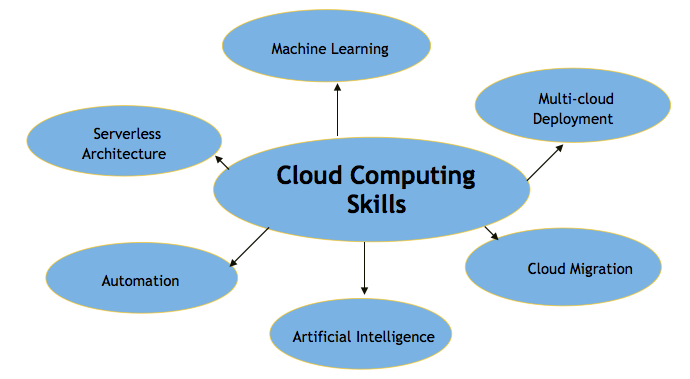
The skills you will learn with the top cloud computing courses are as follows-
-
Cloud Platform Proficiency
Understanding of leading cloud platforms like AWS, Azure, or GCP.
-
Cloud Architecture
Designing scalable and resilient cloud solutions.
-
Virtualization
Managing virtual machines and containers.
-
Security
Implementing cloud security best practices.
-
Networking
Configuring cloud networks and VPNs.
-
Storage Management
Utilizing cloud storage services effectively.
-
Automation
Writing scripts and templates for infrastructure as code.
-
DevOps Practices
Integrating development and operations for continuous delivery.
-
Scalability
Handling dynamic workloads and auto-scaling.
-
Cost Management
Optimizing cloud costs and resource allocation.
-
Cloud Monitoring
Implementing monitoring and alerting solutions.
-
Data Management
Managing and analyzing data in the cloud.
-
Container Orchestration
Deploying and managing containers using Kubernetes.
-
Serverless Computing
Building serverless applications.
-
Compliance and Governance
Ensuring cloud resources meet regulatory requirements.
What job opportunities can one take after the cloud certification training?
The top available job opportunities one can take after the cloud certification training are as follows-
- Cloud Solutions Architect
- Cloud Engineer
- Cloud Developer
- Cloud Administrator
- Cloud Security Specialist
- Cloud DevOps Engineer
- Cloud Data Engineer
- Cloud Operations Manager
- Cloud Consultant
- Cloud Support Engineer
- Cloud Network Engineer
- Cloud Storage Administrator
- Cloud Compliance Analyst
- Cloud Product Manager
- Cloud Sales Specialist
- Cloud Business Analyst
- Cloud Automation Engineer
- Cloud Database Administrator
- Cloud AI/ML Engineer
- Cloud Technical Trainer
What are the salary aspects for a cloud-certified in IT?
The salary aspects for a cloud-certified in the IT industry in different countries are as follows-
- United States: USD 100,000 – USD 150,000 per year
- Canada: CAD 80,000 – CAD 130,000 per year
- United Kingdom: GBP 50,000 – GBP 100,000 per year
- Australia: AUD 90,000 – AUD 140,000 per year
- Germany: EUR 60,000 – EUR 110,000 per year
- France: EUR 50,000 – EUR 100,000 per year
- India: INR 6,00,000 – INR 20,00,000 per year
- Singapore: SGD 70,000 – SGD 130,000 per year
- United Arab Emirates: AED 150,000 – AED 300,000 per year
- Japan: JPY 6,000,000 – JPY 12,000,000 per year
- South Africa: ZAR 300,000 – ZAR 700,000 per year
- Brazil: BRL 60,000 – BRL 150,000 per year
- Mexico: MXN 300,000 – MXN 800,000 per year
- China: CNY 100,000 – CNY 250,000 per year
- South Korea: KRW 40,000,000 – KRW 100,000,000 per year
- Russia: RUB 1,000,000 – RUB 2,500,000 per year
- Malaysia: MYR 60,000 – MYR 120,000 per year
- Sweden: SEK 500,000 – SEK 900,000 per year
- Netherlands: EUR 50,000 – EUR 110,000 per year
- Switzerland: CHF 90,000 – CHF 150,000 per year
Wrapping Up!
Cloud computing is rapidly evolving, and staying updated with emerging trends is crucial for IT professionals. By understanding the need for cloud computing, exploring its benefits, and being aware of the top cloud trends for 2024, you can position yourself for success in this dynamic field. Consider enrolling in relevant courses, acquiring the necessary skills, and exploring various job opportunities available in this growing industry.
Happy Learning!
Related Blogs-
Why Cloud Computing is Important for Your Career? Explained
How to Get into Cloud Computing: An Ultimate Guide to Start Your Journey!
STaaS in Cloud Computing: A Comprehensive Guide
What are the Cloud Capabilities in Tech
Google Professional Cloud Architect: Is Google Cloud certification worth it or not?
Cloud Engineer Jobs in India: Mystery Revealed
Top Most-Asked Microsoft Azure Interview Questions and Answers
GCP vs AWS: Which Cloud Certification is the Best?