Network Kings, India’s Leading IT Career Training Academy
- Email: support@nwkings.com
- SCO 41-43, B Block, 4th floor, Chandigarh Citi Center




The Cyber Kill Chain model showcases the seven stages that an attacker uses for system and data exploitation. Developed by Lockheed Martin in 2022, this cybersecurity model explains how an attacker looks for vulnerabilities in systems to find sensitive data and exploit it.
This guide explains what the Cyber Kill Chain framework is, the various stages of Cyber Kill Chain, its examples and finally Cyber Kill Chain vs MITRE att&ck. Whether you’re an aspiring cybersecurity engineer or ethical hacker, this guide is for you!
What is Lockheed Martin’s Cyber Kill Chain Methodology?
Lockheed Martin’s Cyber Kill Chain is a way to understand how computer attacks happen and how to stop them. It breaks down the attack process into steps, kind of like a checklist. It is a safety mechanism for identification and prevention of malicious activities of parsing any system or network by cyber attackers.
What are the Main Cyber Kill Chain Phases?
The original Cyber Kill Chain model by Lockheed Martin has 7 main stages. This model is one of the most followed and standardized models in the cybersecurity industry. This model puts forward the motivation and methodology of a cyberattacker throughout the complete attack timeline.
Therefore, the Cyber Kill Chain process sets a path for cybersecurity engineers to examine various stages that a cybercriminal follows to attack and thus, they can stop them from attacking their organization.
The following are the main stages of the cyber kill chain model:
- Reconnaissance
- Weaponization
- Delivery
- Exploitation
- Installation
- Command and control
- Action
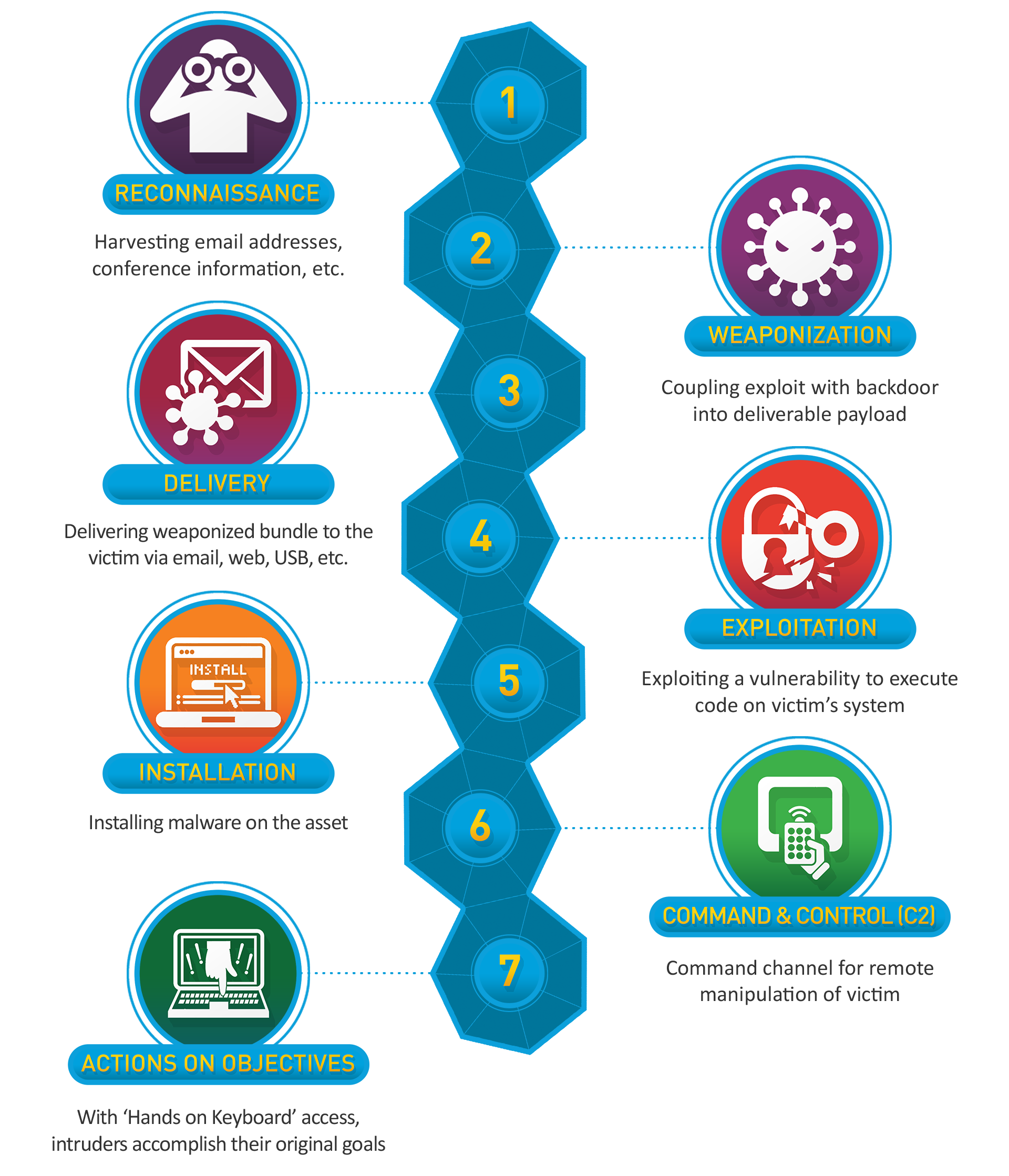
1. Reconnaissance
- During the information-gathering stage which is the first stage of the Cyber Kill Chain process, attackers get information about the target.
- In this stage, they look for information such as the structure of the organization, the technologies that are used, and the potential vulnerabilities.
- They can scan through websites, social media, or use tools that can identify open ports.
- Their goal is to know the target well enough to plan an effective attack.
2. Weaponization
- Once the attackers have gathered enough information, they create a weapon to exploit the target’s weaknesses.
- This is usually done by combining malicious code (like a virus) with a delivery method (such as a phishing email or a compromised document).
- The objective is to prepare a payload that will be sent to the target in the next stage.
3. Delivery
- In this phase, attackers send their weaponized payload to the target.
- This can take place through numerous channels, for example, email attachments or malicious links as well as physically via USB drives.
- The means of delivery chosen is based on what the attacker believes will have the best likelihood of reaching their target.
4. Exploitation
- Following payload delivery, the malicious code will exploit the delivered payload.
- Exploitation is the activation of the malicious code that makes use of the system vulnerabilities available in the target’s systems.
- For instance, it may use a software flaw to gain access to the system.
- Exploitation then allows the attackers to begin gaining control of the target’s environment.
5. Installation
- Once exploitation is successful, attackers install malware on the target’s system.
- This could be a backdoor or other malicious software that allows them to maintain access even if the initial vulnerability is patched.
- This stage ensures they can return to the system later without needing to go through the previous steps again.
6. Command and Control (C2)
- During this stage, attackers set up a command and control channel to interact with the compromised system.
- The channel is then used to transmit commands, pull out data, or deliver other malware.
- This is crucial for sustaining control over the attack and extracting information from the victim.
7. Actions on Objectives
- Finally, attackers achieve their goals, whether that’s stealing data, disrupting services, or causing other harm.
- They execute their planned attack based on the information they’ve gathered and their initial intent.
- After completing their objectives, they may cover their tracks to avoid detection and ensure continued access if needed.
What are Some of the Cyber Kill Chain Examples?
If you’re looking for some of the prominent examples of Cyber Kill Chain process, you can look for the following:
1. Spear Phishing Attack
Cyber Kill Chain Model Steps:
- Reconnaissance: The attacker collects information about the target organization and its employees.
- Weaponization: Attacker creates an email, usually one with an attachment or link that’s malicious.
- Delivery: Sending the spear phishing email to the target.
- Exploitation: The attacker opens the email, activates the malicious content.
- Installation: Malware is installed on the target’s system.
- Command and Control (C2): Attacker establishes a connection to control the compromised system.
- Actions on Objectives: Data exfiltration or other malicious activities.
2. Ransomware Attack
Cyber Kill Chain Process:
- Reconnaissance: Identifying which systems in the organization are weak.
- Weaponization: Developing the ransomware targeted to exploit some vulnerabilities.
- Delivery: Using means such as phishing emails or an exploit kit for delivering the ransomware.
- Exploitation: The ransomware executes when users interact with the system or upon system vulnerability.
- Installation: It installs itself and encrypts the files on the target device.
- C2: The ransomware communicates with the attacker’s server for instructions.
- Actions on Objectives: The attacker demands a ransom for the decryption keys.
3. Advanced Persistent Threat (APT)
Cyber Kill Chain Examples:
- Reconnaissance: Extensive research on a high-value target.
- Weaponization: Advanced malware or zero-day exploits.
- Delivery: Targeted attacks such as USB drops or strategic phishing.
- Exploitation: Vulnerability exploitation to gain initial access.
- Installation: Backdoors for continued access.
- C2: Continued communication with compromised systems over time.
- Actions on Objectives: Stealing sensitive data or disrupting operations over an extended period.
4. SQL Injection Attack
Cyber Kill Chain Model Steps:
- Reconnaissance: SQL injection attacks on web applications, searching for vulnerabilities in the databases.
- Weaponization: Forming SQL queries that can control the database operations.
- Delivery: Transferring the malicious SQL code through input fields or URLs.
- Exploitation: The application executes the malicious SQL code, thereby giving access to unauthorized users to sensitive data and modification of records.
- Installation: Installation of additional tools or scripts may be done for further access, like backdoors or web shells.
- Command and Control (C2): A connection is established with the attacker’s server for controlling and stealing data.
- Actions on Objectives: The attacker executes goals like data theft, destruction or further network infiltration for financial gain or spreading insider information.

Know the Difference: Cyber kill chain vs. MITRE ATT&CK
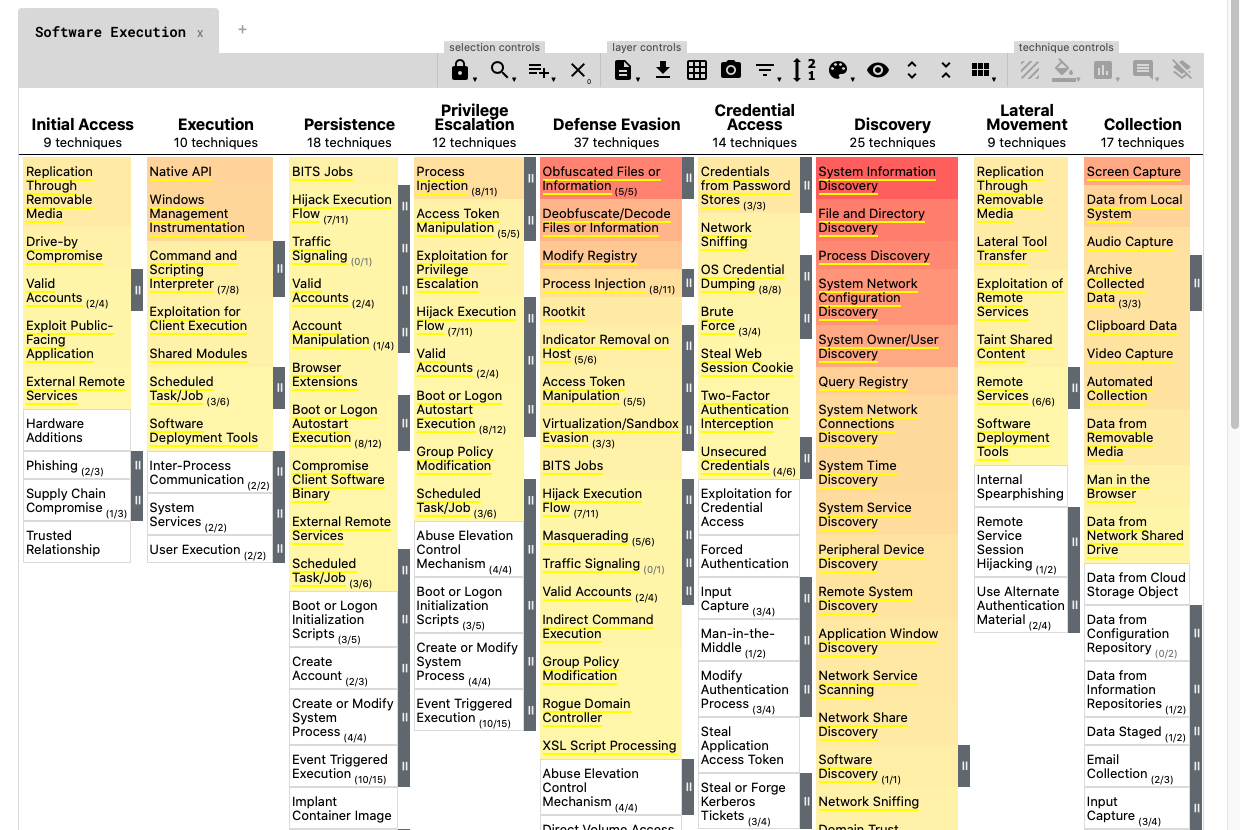
Created by the MITRE Corporation, MITRE ATT&CK framework is yet another model to understand how cybercriminals navigate their way to perform a cyberattack. It is similar to the Cyber Kill Chain model by Lockheed Martin. In short, it displays the various phases of a cyberattack.
However, the key differences between the two are as follows:
Cyber Kill Chain:
- The Cyber Kill Chain methodology was created in 2022 by Lockheed Martin, a leading global security, defense and aerospace manufacturer based in America.
- This model follows a linear order where all the steps follow a sequence.
- It discusses the seven phases of how a cybercriminal navigates to perform a cyberattack.
- It is a high-level model.
MITRE ATT&CK:
- The MITRE ATT&CK framework came into existence in 2013. It is created by the MITRE corporation.
- It is similar to the Cyber Kill Chain process. The main difference is that the steps involved do not follow any sequence.
- This methodology zooms in into the process and discusses the nitty gritty of how cybercriminals navigate to compromise on an organization’s security.
Final Thoughts
Lockheed Martin’s Cyber Kill Chain framework breaks down the cyber threat into a structured approach in understanding and mitigation. It takes the attack process into seven steps: Reconnaissance, Weaponization, Delivery, Exploitation, Installation, Command and Control, and Actions on Objectives, which helps security professionals identify weaknesses and develop plans to prevent future attacks.
This model not only enhances the ability to defend against cyber threats but also serves as a foundational tool for cybersecurity training and incident response planning. Understanding this framework is essential for anyone involved in protecting digital assets from cybercriminals.
FAQs:
1. What is the Cyber Kill Chain?The Cyber Kill Chain is a model developed by Lockheed Martin that describes the phases of a cyber attack. It consists of seven stages: reconnaissance, weaponization, delivery, exploitation, installation, command and control, and actions on objectives.
2. What are the main stages in the Cyber Kill Chain?
The main stages of the Cyber Kill Chain include:
Reconnaissance
Weaponization
Delivery
Exploitation
Installation
Command and Control (C2)
Actions on Objectives
The Cyber Kill Chain runs in a linear sequence of actions in the attack process, while the MITRE ATT&CK framework does not. MITRE ATT&CK gives a more detailed explanation of the attack techniques and tactics that cybercriminals employ in their attacks.
One example is a spear phishing attack where:
Reconnaissance: An attacker gathers information about the target.
Weaponization: The attacker creates a malicious email with an attachment.
Delivery: The email is sent to the target.
Exploitation: The target opens the email and activates the malware.
Installation: Malware is installed on the target’s system.
Command and Control: The attacker establishes communication with the compromised system.
Actions on Objectives: Data is exfiltrated or other malicious activities are carried out.
Understanding the Cyber Kill Chain gives the cybersecurity professional insight into areas in their system that he can improve to prevent attacks and outline a clear strategy for incident response.