Network Kings, India’s Leading IT Career Training Academy
- Email: support@nwkings.com
- SCO 41-43, B Block, 4th floor, Chandigarh Citi Center




Introduction to Hypervisor in Cloud Computing
Cloud computing is an essential part of modern IT infrastructure, offering scalability, flexibility, and cost-effectiveness to businesses of all sizes. At the heart of this technology lies a crucial component: The Hypervisor.
In this blog, you will get to know What is a Hypervisor in cloud computing, How Hypervisor works, What are the types of Cloud hypervisors and what are the prospects when a Hypervisor in Cloud computing is concerned. Don’t miss out on What is the best cloud computing certification program for you. Let’s get started.
What is Hypervisor in Cloud Computing?
Hypervisors are software layers that allow the creation and management of Virtual Machines (VMs) on physical hardware. They act as a mediator between the physical hardware and the virtual cloud environments, enabling multiple operating systems to run together on a single physical machine.
What is the Role of Hypervisor in Virtualization?
Hypervisors play a very important role in Virtualization by:
- Abstracting hardware resources
- Allocating resources to Virtual Machines(VMs)
- Managing VM lifecycles
- Ensuring isolation between
What is the need to use Hypervisor in Cloud Computing?
The need to use hypervisor in cloud computing has been driven by improved efficiency, scalability, and flexibility. Early hypervisors were primarily used in data centers, but cloud computing has pushed their development towards more strong and exclusive features.
What are the types of Hypervisors in Cloud Computing?

A. Type 1 Hypervisor in Cloud Computing
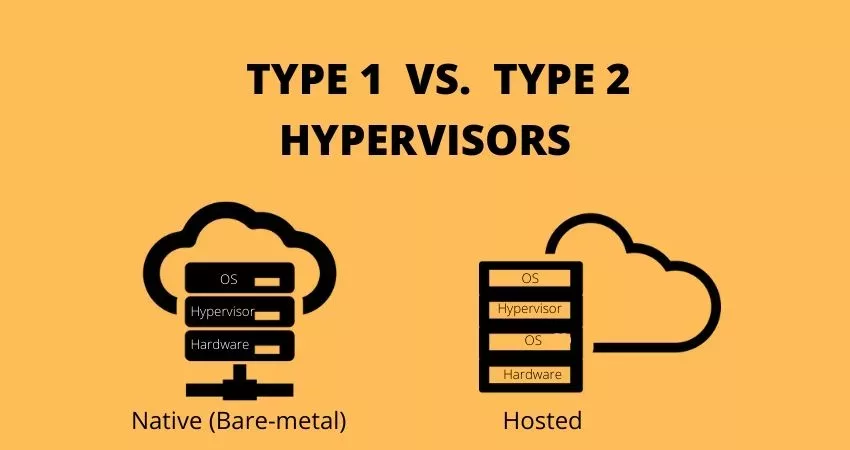
Type 1 hypervisor (Bare-metal) runs directly on the hardware without the need for a host operating system. They offer better performance and security compared to Type 2 Hypervisor. There are few examples which include:
- VMware ESXi
- Microsoft Hyper-V( when installed as a standalone solution)
- Citrix XenServer
B. Type 2 Hypervisor in Cloud Computing
Type 2 hypervisor runs on top of a host operating system. They are easier to install and manage but generally offer lower performance compared to Type 1 hypervisor.
What is the comparison of Type 1 and Type 2 Hypervisor in Cloud Computing?
|
Aspect |
Type 1 |
Type 2 |
|
Performance |
Higher |
Lower |
|
Security |
Better |
Good |
|
Management |
More Complex |
Easier |
|
Use Case |
Enterprise/Cloud |
Desktop/Development |
How Hypervisor works?
Since we have discussed, what is a hypervisor in Cloud computing. Let’s have a look at How Hypervisor works:
Resource Allocation and Management –
Hypervisor is responsible for designating and managing hardware resources like CPU, memory, storage, and network bandwidth among virtual machines. This ensures proper use of physical hardware resources and prevents resource conflicts between Virtual Machines.
Isolation and Security of Virtual Machines(VMs)-
A hypervisor in cloud computing is to maintain the isolation between Virtual Machines. This isolation ensures that:
- VMs cannot access each other’s memory or storage
- A security breach in one VM does not affect others
- Resource usage of one VM does not impact others
Performance Monitoring and Optimization-
Hypervisor in Cloud computing continuously monitors the performance of virtual machines and the underlying hardware.
They can:
- Identify performance bottlenecks
- Reallocate resources dynamically
- Optimize Virtual Machine placement across physical hosts
What are the advantages of Hypervisor in Cloud Computing?
- Portable –
Hypervisor allows the operating systems to run on the same servers, Hence they are portable as they are virtual computers and not real machines.
- Quickness –
Cloud environments benefit from the flexibility and scalability offered by hypervisors to be able to quickly scale resources up or down and support diverse workloads on the same infrastructure.
- Efficient –
By improving resource utilization and reducing hardware requirements, hypervisors in cloud computing contribute to lower capital expenditure (CapEx) on hardware ,reduce Operational expenditure (OpEx) for power and cooling and Improve the overall return on investment (ROI) for cloud infrastructure.
- Being Adaptable –
The program is independent when specific hardware units or adapters are concerned as the hypervisor separates the operating system from the actual hardware
- Replication of Data-
Hypervisor-based replication operations are carried out quickly and are faster and cost effective as compared to the other technique of virtual machine replication.
What are the disadvantages of Hypervisor in Cloud Computing?
While Hypervisor in cloud computing has become more efficient, it still has some challenges that need to be considered and addressed:
- Less Dependable –
Although cloud hypervisors are efficient at work, they still introduce some performance overhead as any discrepancies in the performance and availability of the host Operating system influence the hypervisor.
- Inability –
Hypervisors may face compatibility challenges with certain hardware components or drivers and the legacy software not designed for virtualized environments.
- Less Safe –
Despite providing isolation, Cloud hypervisors can introduce new security risks like hypervisor-level attacks and the complexity in managing security across multiple VMs.
- Access to Host Resources decreased –
The hypervisor has limited access to a number of resources since it shares the components of the basic infrastructure with the host Operating system.
- Set Up Problem –
The requirement to set up the hypervisor needs a different system or computer altogether. To manage the hypervisor in cloud computer needs external administrative interface
To do away with these security risks there are some mitigation strategies which include:
- Regular security patching and updates
- Implementing strong access controls
- Using security monitoring and intrusion detection systems
Choose The Right Cloud Computing Program For You to advance your Career
The following table will provide you with a detailed overview of the Cloud Computing courses offered by the Network Kings. This table has an overview of the skills you will learn, the course details, and course duration among other important factors to help you to make an informed decision on which course best suits you:
|
Course Name |
Course Duration |
Topics covered |
To Know More |
|
AWS Solutions Architect |
2 to 2.5 Months |
Cloud Concepts, Security and Compliance, Technology, Billing and Pricing |
|
|
AWS Network Specialist |
2 to 2.5 Months |
Network Design, Implementation, Management and Operation, security, compliance and Governance |
|
|
AWS DevOps |
2 Months |
SDLC Automation, monitoring and logging, policies and standards automation, incident and event response, Configuration management and infrastructure as code |
|
|
AWS Security |
2 Months |
Incident response, Infrastructure security, logging and monitoring, identity and access management, Data Protection |
|
|
Azure-104 |
2 to 2.5 Months |
Cloud concepts, Azure architecture and services, Management and Governance |
|
|
Azure-500 |
2 Months |
Manage identity and access, secure networking, secure, compute, storage, and databases, Manage security operations |
|
|
Azure-700 |
2 Months |
Design and implement core networking infrastructure, Design, implement, and manage connectivity services, manage security operations |
|
|
GCP |
2 Months |
VMs, VNs, Cloud IAM, App Engine, Cloud Run, Resource Management, Google Kubernetes Engine, Cloud Migrations |
Network Kings also offers a comprehensive Master’s program in Cloud computing for professionals aiming to Master in Cloud Computing domain:
- AWS Cloud Security Master Program
- Azure Cloud Security Master Program
- Google Cloud Platform (GCP) Master Program
What are the Future Trends in Cloud Hypervisors?
A. Container-based virtualization –
The rise of container technologies like Docker is influencing the development of Hypervisor:
- Assimilation of container support in traditional hypervisor
- Development of lightweight, container-optimized hypervisor
- Hybrid approaches combining VMs and containers
B. Unikernel Adoption –
Unikernels, which are specialized, single-purpose operating systems, are very popular because of their:
- Potential for improved security and performance
- Reduced overhead compared to traditional VMs
- Challenges in management and ecosystem support
C. AI-driven hypervisor Management –
Artificial Intelligence(AI) and Machine Learning(ML) are being integrated into hypervisor management:
- Predictive resource allocation and optimization
- Automated performance tuning and troubleshooting
- Enhanced security through anomaly detection
Note: Click on this highlighted link to get more familiar about the latest cloud trends.
Wrapping Up
Hypervisor in cloud computing plays an important role by enabling efficient resource utilization, flexibility, and scalability. While cloud hypervisors face challenges in performance overhead and security, ongoing development in container integration, unikernel adoption, and AI-driven management are shaping the future of hypervisors in cloud computing.
If you have any questions feel free to write to us and we will be happy to guide you every step of the way.
Frequently Asked Questions –
Q1. Define hypervisor in Cloud Computing.
Hypervisor in cloud computing is an important software layer that allows the creation and management of Virtual Machines(VMs), allowing multiple operating systems to share a single physical hardware resource efficiently and securely.
Q2. What is the difference between a virtual machine and a Hypervisor?
A Virtual Machine is a software-based simulation of a physical computer, while a hypervisor is the software layer that creates and manages these virtual machines (VMs)
Q3. Why use a Hypervisor?
Hypervisors are used to make better use of hardware utilization, increase flexibility, strengthen security through isolation, and reduce costs in IT infrastructure.
Q4. What is a Cloud Hypervisor?
A cloud hypervisor is a type of hypervisor specifically designed for use in cloud computing environments, often with features tailored to multi-tenant scenarios and large-scale deployments.
Related Blogs-
Cybersecurity vs Cloud Computing: Know the Lying Secrets
Advantages and Disadvantages of Cloud Computing: Explained
Networking Vs Cloud Computing: Know The Ultimate Tech Now
Evolution of Cloud Computing: Trends and Future
The Future of Cloud Computing: Explained in Detail
Cloud Computing Security Explained: A Comprehensive Guide
What Are Containers In Cloud Computing And How Do They Work?
Exploring the Key Components of Cloud Computing